
Mar 02, · After these financial statements are completed, the business plan writer will have an accurate picture of how the business has performed and can project how the business will perform in the coming year(s). With such information, the owner--and any readers of the business plan--will be able to evaluate the viability of the business and have an I will write professional business plan for startups, business plan writer. (44) Starting at $ a. andreacerio. Level 2 Seller. I will craft a business plan with marketing and financial model. () Starting at $ o. opzy_tr. I will prepare a comprehensive business plan Creating your new business plan involves a detailed process with a number of stages, some of which can overlap. Whether you are writing your plan from scratch or from a simple business plan template, or working with an experienced business plan writer or consultant, you will find the following five steps through the process.. The business plan plan process includes 5 steps as follows
How to Write a Business Plan Outline
JavaScript seems to be disabled in your browser. You must have JavaScript enabled in your browser to utilize the functionality of this website. Download PDF Save For Later Print Purchase Print Available in Spanish. An important task in starting a new venture is to develop a business plan. As the phrase suggests, a business plan is a "road map" to guide business plan for a writer future of the business or venture. The elements of the business plan will have an impact on daily decisions and provide direction for expansion, diversification, and future evaluation of the business.
This publication will assist in drafting your own business plan. It includes a discussion of the makeup of the plan and the information you need to develop a business plan, business plan for a writer. Business plans are traditionally developed and written business plan for a writer the owner with input from family members and the members of the business team.
Business plans are "living" documents that should be reviewed and updated every year or if an opportunity for change presents itself. Reviews reinforce the thoughts and plans of the owner and the business, and aid in the evaluation process. For an established venture, evaluation determines if the business is in need of change or if it is meeting the expectations of the owners. The presentation of the plan should be as professional as possible to portray your business in a positive manner.
When dealing with a lender or possible investor, the plan will be reviewed for accuracy and suggestions for changes to the plan may be offered.
The decision business plan for a writer recommend the loan to the appropriate committee or reject the proposal will be largely based on your business plan. Often loan officers will not know a great deal about the proposed venture, but they will know the correct structure of a business plan. Investors will make their decision based on the plan and the integrity of the owner. For this reason, it is necessary to use a professional format. After loan officers complete their evaluations, the loan committee will further review the business plan and make a decision.
The committee members will often spend limited time reviewing the document, focusing on the message of the executive summary and financial statements to make their determination.
Because of this, these portions need to be the strongest parts of the plan and based on sound in-depth research and analysis. A business plan should be structured like a book with the title or cover page first, followed by a table of contents.
Following these two pages, the main parts of the plan normally appear in this order: executive summary, business mission statement, goals and objectives, background information, organizational matters, marketing plan, and financial plan. The executive summary is placed at the front of the business plan, but it should be the last part written. The summary describes the proposed business or changes to the existing business and the sector of which the business is or will be a part.
Research findings and recommendations should be summarized concisely to provide the reader with the information required to make any decisions. The summary outlines the direction and future plans or goals of the business, as well as the methods that will be used to achieve these goals, business plan for a writer.
The summary should include adequate background information to support these recommendations, business plan for a writer. The final financial analysis and the assumptions used are also a part of the executive summary. The analysis should show how proposed changes will ensure the sustainability of the current or proposed business.
All challenges facing the existing business or proposed venture should also be discussed in this section. Identifying such challenges shows the reader that you have explored and taken into account all considerations during the research process.
This section has three separate portions. It begins with a brief, general description of the existing or planned business. The overview is followed by the mission statement of the business, business plan for a writer. You should try to limit the mission statement to three sentences if possible and include only the key ideas about why the business exists. An example of a mission statement for a produce farm might be: "The mission of XYZ Produce is to provide fresh, healthy produce to our customers, and to provide a safe, friendly working environment for our employees.
The third and final portion sets the business's goals and objectives. There are at least two schools of thought about goals and objectives. One is that the goals are the means of achieving the objectives, and the other is exactly the opposite--that the objectives are the means of achieving the goals.
Whichever school you follow, this is a very important part of the business plan. These goals and objectives should show the reader what the business wishes to accomplish and the steps needed to obtain the desired results. Goals or objectives should follow the acronym SMARTwhich stands for S pecific, M easurable, A ttainable, R easonable, and T imed, to allow for evaluation of the business plan for a writer process and provide valuable feedback along the way.
The business owner should continually evaluate the outcomes of decisions and practices to determine if the goals or objectives are being met and make modifications when needed.
Background information should come from the research conducted during the writing process. This portion should include information regarding the history of the industry, the business plan for a writer state of the industry, and information from reputable sources concerning the future of the industry. This portion of the business plan requires the most investment of time by the writer, with information gathered from multiple sources to prevent bias or undue optimism.
The writer should take all aspects of the industry past, present, and future and business into account. If there are concerns or questions about the viability of the industry or business, these must be addressed. In writing this portion of the plan, information may be obtained from your local public library, periodicals, industry personnel, trusted sources on the Internet, and Penn State Extension.
Industry periodicals are another excellent source of up-to-date information. The more varied the sources, the better the evaluation of the industry and the business, and the greater the opportunity to have an accurate plan. The business owner must first choose an appropriate legal structure for the business. The business structure will have an impact on the future, business plan for a writer, including potential expansion and exit from the business.
If the proper legal structure is not chosen, business plan for a writer, the business may be negatively impacted down the road. Only after the decision is made about the type of business can the detailed planning begin. This section of the plan describes the current or planned business structure, the management team, and risk management strategies. There are several forms of business structure to choose from, including sole proprietorship, partnership, corporations subchapter S or subchapter Ccooperative, and limited liability corporation or partnership LLC or LLP.
These business structures are discussed in Starting or Diversifying an Agricultural Business. The type of business structure business plan for a writer an important decision and often requires the advice of an attorney and an accountant. The business structure should fit the management skills and style s of the owner or owners and take into account the risk management needs both liability and financial of the business.
In this case, a partnership, cooperative, corporation, LLC, or LLP would be the proper choice. If the business is not a sole proprietorship, the management team should be described in the business plan.
The management team should consist of all parties involved in the decisions and activities of business plan for a writer business. The strengths and backgrounds of management team members should be discussed to highlight the positive aspects of the team.
Even if the business is a sole proprietorship, usually more than one person often a spouse, child, relative, or other trusted person will have input into the decisions and therefore should be included as team member s.
Regardless of the business structure, business plan for a writer, all businesses should also have an external management support team. This external management support team should consist of the business's lawyer, business plan for a writer, accountant, insurance agent or broker, and possibly a mentor.
These external members are an integral part of the management team. Many large businesses have these experts on staff. For small businesses, the external management team replaces full-time experts; the business owner s should consult with this external team on a regular basis at least once a year to determine if the business is complying with all rules and regulations. Listing the management team in the business plan allows the reader to know that the business owner has developed a network of experts to provide advice.
The risk management portion of the business plan provides a description of how the business will handle unexpected or unusual events. For example, if the business engages in agricultural production, will the business purchase crop insurance? Does the business have adequate liability insurance?
Is the business diversified to protect against the unexpected, rather than "putting all its eggs in one basket"? If the business has employees, does the business carry adequate workers' compensation insurance? All of these questions should be answered in the risk management portion of the business plan.
More information how liability can affect your business and on the use of insurance as a risk management tool can be found in Agricultural Business Insurance and Understanding Agricultural Liability.
All marketing strategies or objectives carry a degree of risk and must be evaluated, and mitigation strategies should be included in this portion of the plan. Every purchase decision that a consumer makes is influenced by the marketing strategy or plan of the company selling the product or service. Products are usually purchased based on consumer preferences, including brand name, price, and perceived quality attributes.
Consumer preferences develop and change over time, and an effective marketing plan takes these preferences into account. This makes the marketing plan an important part of the overall business plan.
In order to be viable, the marketing plan must coincide with production activities. The marketing plan must address consumer desires and needs. For example, if a perishable or seasonal crop such as strawberries will be produced, the marketing plan should not include sales of locally grown berries in January if the business is in the northeastern United States.
If the business plans to purchase berries in the off-season from other sources to market, this information needs to be included. In this way, the marketing plan must fit the production capabilities or the capability to obtain products from other sources.
A complete marketing plan should identify target customers, including where they live, work, and purchase the product or service you are providing. Products may be sold directly to the consumer retail or through another business wholesale.
Whichever marketing avenue you choose, if you are starting a new enterprise or expanding on an existing one, you will need to decide if the market can bear more of what you plan to produce.
Your industry research will assist in this determination. The plan must also address the challenges of the marketing strategy proposed.
This portion of the plan contains a description of the characteristics and advantages of your product or service. Identifying a "niche" market will be of great value to your business. Other variables to consider are sales location, business plan for a writer, market location, promotion and advertising, pricing, staffing, and the costs associated with all of these.
All of these aspects of the marketing plan will take time to develop and should not be taken lightly. Further discussion on marketing fruits and vegetables can be found in Fruit and Vegetable Marketing for Small-scale and Part-time Growers.
How To Write a Business Plan To Start Your Own Business
, time: 8:50Business Plan Pro - Business Planning Software
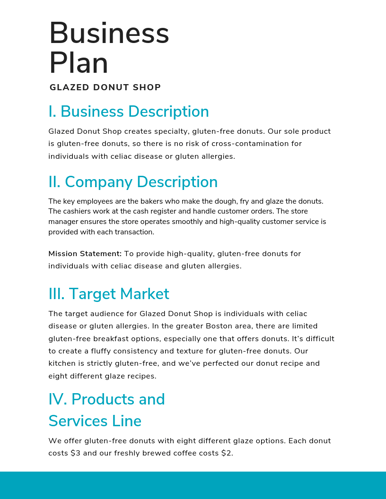
Mar 02, · After these financial statements are completed, the business plan writer will have an accurate picture of how the business has performed and can project how the business will perform in the coming year(s). With such information, the owner--and any readers of the business plan--will be able to evaluate the viability of the business and have an May 06, · Market Analysis. The market analysis is a crucial section of the business plan, as it identifies your best customers or clients. To create a compelling market analysis, thoroughly research the primary target market for your products/services, including geographic location, demographics, your target market's needs, and how these needs are currently being met Say goodbye to writer's block! With Business Plan Pro, you get over complete sample business plans you can use for inspiration or edit directly. 1,,+ Entrepreneurs. More than a million entrepreneurs have used Business Plan Pro. That includes everyone from first-time business owners to leaders at more than half of the Fortune

No comments:
Post a Comment